
Searching Scientific Literature with AI
Generative AI models such as Large Language Models (LLMs) ‘understand’ natural language queries. You enter a fully phrased question specifying initial and target criteria as precisely as possible – a so-called prompt – for the AI tool to generate a fully articulated response in natural language. This can also be used to find scientific literature – though the variable quality of the generated ouput makes for an unpredictable effort-to-benefit ratio.
You can find out which AI tools may be useful for scientific literature searches and for which use cases generative AI will not be helpful in a comprehensive and up-to-date overview provided by colleagues at the University Library of Tübingen, as well as in the general user guide from the University Library of Würzburg.
Information on literature search
University Library Greifswald
Felix-Hausdorff-Str. 10
17489 Greifswald
Phone +49 3834 420 1515
ubinfouni-greifswaldde

Watch Out for Hallucinations
Multi-purpose chatbots powered by generative AI, such as ChatGPT, Gemini, Claude, Microsoft Copilot, Perplexity and others, can help to quickly assess the suitability of a topic for student essays, refine research questions, structure text drafts or create summaries. However, they are currently of little use for thorough searches for scientific literature: they frequently invent non-existent book titles and false information, and rarely provide valid source references, as they largely lack access to databases containing academic publications. These AI chatbots suggest only a small number of literature titles and frequently generate, alongside genuine references, further bibliographic entries that appear relevant – complete with author or journal details – which, however, do not exist at all. The more specific the topic, the more frequently the AI tool ‘hallucinates’.
The reason for the hallucinations is that the tool’s probability algorithm is designed to generate a plausible-looking compilation as quickly as possible in order to meet the statistically expected preferences of users. This occurs regardless of the truthfulness of the content. Results from an AI chatbot must therefore always be cross-checked against library catalogues and essay databases when conducting a search for literature. As such, these general AI chatbots currently offer no real added value or timesaving compared to catalogue searches.
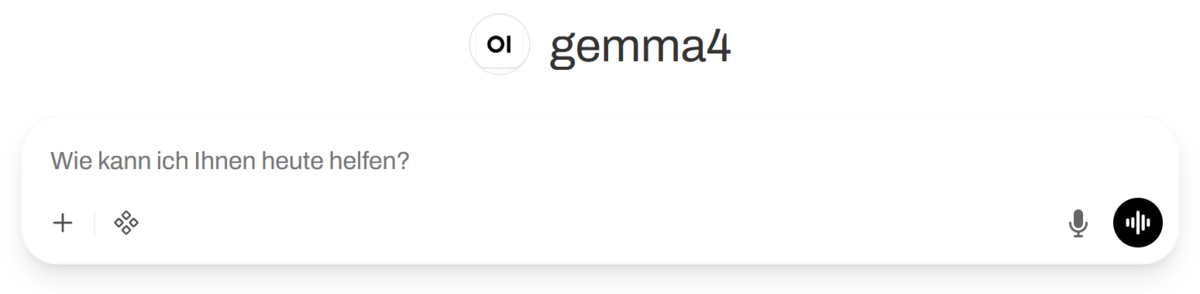
A second aspect is the transmission of data by the providers of such AI systems. However, tools from the University of Greifswald’s AppHub allow AI to be used securely: the chatbot, which is based on the gemma4 language model via openWebUI, can be used in the same way as ChatGPT4, but the queries and data remain on the university’s servers.

In Need of Expert Advice?
The University Library offers courses, training sessions and short workshops on scientific literature research methods and information literacy, both with and without the use of AI, tailored to the varying levels of prior knowledge of students and early-career researchers.
Here you can find the calendar for AI courses and here further information resources on the topic of AI (videos, tips and learning materials). Feel free to also ask the subject librarians at the University Library.
Connectors- and Finders
When it comes to incorporating AI into literature searches, there is a key distinction between general AI chatbots and specialised ‘finder’ and ‘connector’ AI tools. Specialised connector or finder tools are better suited to literature searches using AI.
Finders operate differently from AI chatbots and draw from a vast pool of reliable metadata from academic publishers, primarily for journal articles and research websites. Typically, the index from Semantic Scholar or a Google Scholar data pool is used.
Using AI based on large language models, the index is searched and grouped according to your prompts. There are no hallucinations to be expected. This makes them suitable for searching for specialised literature. However, there are limitations regarding the availability of sources.
Finders (e.g. Semantic Scholar, ORKG ASK, Consensus, Keenious, Google Scholar Labs among others)
- interpret natural language queries and identify relevant search terms
- search metadata, abstracts and, in some cases, full texts to identify relevant sources and sort them by relevance
- answer search queries based on relevant sources, which are linked
- extract information from publications and present it in a structured format
- summarise publications
- assist users in reading publications; explain or translate text passages
- identify and highlight important text passages
- assist with the analysis of texts
Unlike multi-purpose AI tools, Finder tools rely exclusively on scientific databases as their sources. Sources such as non-English texts, monographs and publications behind a paywall are often lacking in AI-Finder's searches.
The databases on which most tools are based mainly index English-language (OA) articles in the life and natural sciences. These articles have a clear, uniform structure, which makes them easier to locate and summarise. The tools also work best when they can ‘analyse’ full texts, which requires the publication to be available via Open Access or for the tool to have access to content behind a paywall (see Baumgarten, Lelde and Miriam Lahrsow. ‘Literature Research with AI – Tips and Tools’, slide 17. Tübingen University Library, 2026).
Connectors
Connectors are specialised AI tools that, based on an uploaded article or one identified via a URI, can visualise the authors’ citation and research networks, as well as the dependencies and thematic links to related literature, drawing on a large database.
Examples of connector tools include Research Rabbit and Open Knowledge Maps, which can also visualise these relationships in graphs.
Finding the Right Tool
“At present, even the best tools – and even when used in the fields for which they are best suited – produce results that are only as good (and often even slightly worse) as those obtained using ‘traditional’ academic search engines.”
Translated from Baumgarten, Lelde und Miriam Lahrsow. „Literraturrecherche mit KI – Tipps und Tools“, Folie 14. UB Tübingen, 2026.
You can consult the comprehensive comparison tables published and regularly updated by the University Library of Tübingen on the various AI tools and their varying suitability for literature searches to learn about the advantages and limitations of individual finder and connector tools.
Instead, literature searches using structured search methods without AI tools are usually more precise, reliable, comprehensive and faster:
By using the University Library’s catalogues, the interlibrary loan system and article databases, you can find fitting literature in a matter of seconds.
- Search using concise search terms rather than prompts or sentences
- Records for all books and media held by Greifswald University Library and hundreds of thousands of individual journal articles
- If you switch the search scope to “Library Network”, results from the interlibrary loan service are also included
- With links to the full text, licensed access or call number
- Tips for searching the University Library of Greifswald’s Discovery system
Search using specific keywords for all books and media held by the University Library, as well as for journal titles – excluding essay references. However, you can refine your search for books very precisely using the online catalogue of the University Library of Greifswald. Tips on how to do this can be found here.
A Thorough Search for Essays and Articles

Find articles from other journals and anthologies in addition to those already listed in the Discovery system:
Go to your choice of subject in the University Library of Greifswald’s Database Information System (DBIS). Select the type ‘Article database’ and then start your search in the relevant database. The title display of the individual search result will often take you directly to a full text, if available online; otherwise, select the button ‘Check availability at Greifswald University Library’ or a button labelled ‘Available via Greifswald University Library?’.